Nepal is one of the world’s great trekking destinations. Within a relatively small country, you can walk through green valleys, rhododendron forests, traditional mountain villages, high-altitude deserts and landscapes surrounded by some of the tallest mountains on Earth.
But choosing a trek in Nepal is not always easy.
Some routes take less than a week, while others need two or three weeks. Some are suitable for fit beginners, while others involve long days, high mountain passes and serious altitude challenges. The best route depends on more than the mountain views. Your available time, fitness, budget, season and previous trekking experience all matter.
This guide covers 12 of the best treks in Nepal, including famous routes and quieter alternatives. It also explains which treks suit beginners, when to visit, how permits work and what travellers from India and other countries should plan before setting off.
Note: Walking durations and difficulty descriptions are approximate. Exact itineraries vary by starting point, acclimatisation days, weather and operator.
Quick comparison: Best treks in Nepal
| Trek | Approx. time on route | Highest point or key viewpoint | General difficulty |
|---|---|---|---|
| Everest Base Camp | 12–14 days | Kala Patthar, 5,545 m | Challenging |
| Annapurna Base Camp | 7–10 days | ABC, 4,130 m | Moderate to challenging |
| Mardi Himal | 5–7 days | Mardi Himal viewpoint, around 4,500 m | Moderate |
| Ghorepani Poon Hill | 4–5 days | Poon Hill, 3,210 m | Easy to moderate |
| Annapurna Circuit | 12–18 days | Thorong La, 5,416 m | Challenging |
| Langtang Valley | 7–9 days | Kyanjin Ri, around 4,773 m | Moderate to challenging |
| Gokyo Lakes | 11–14 days | Gokyo Ri, around 5,357 m | Challenging |
| Manaslu Circuit | 14–18 days | Larkya La, around 5,106 m | Challenging |
| Khopra Ridge | 7–9 days | Khopra Ridge, around 3,660 m | Moderate |
| Upper Mustang | 10–14 days | Lo Manthang, around 3,840 m | Moderate |
| Kanchenjunga Base Camp | 18–24 days | Route-dependent high camps | Very challenging |
| Upper Dolpo | 18–25+ days | Route-dependent high passes | Very challenging |
These are planning ranges, not fixed itineraries. Some routes need additional days for travel, acclimatisation and weather buffers.
1. Everest Base Camp Trek – The classic Himalayan journey
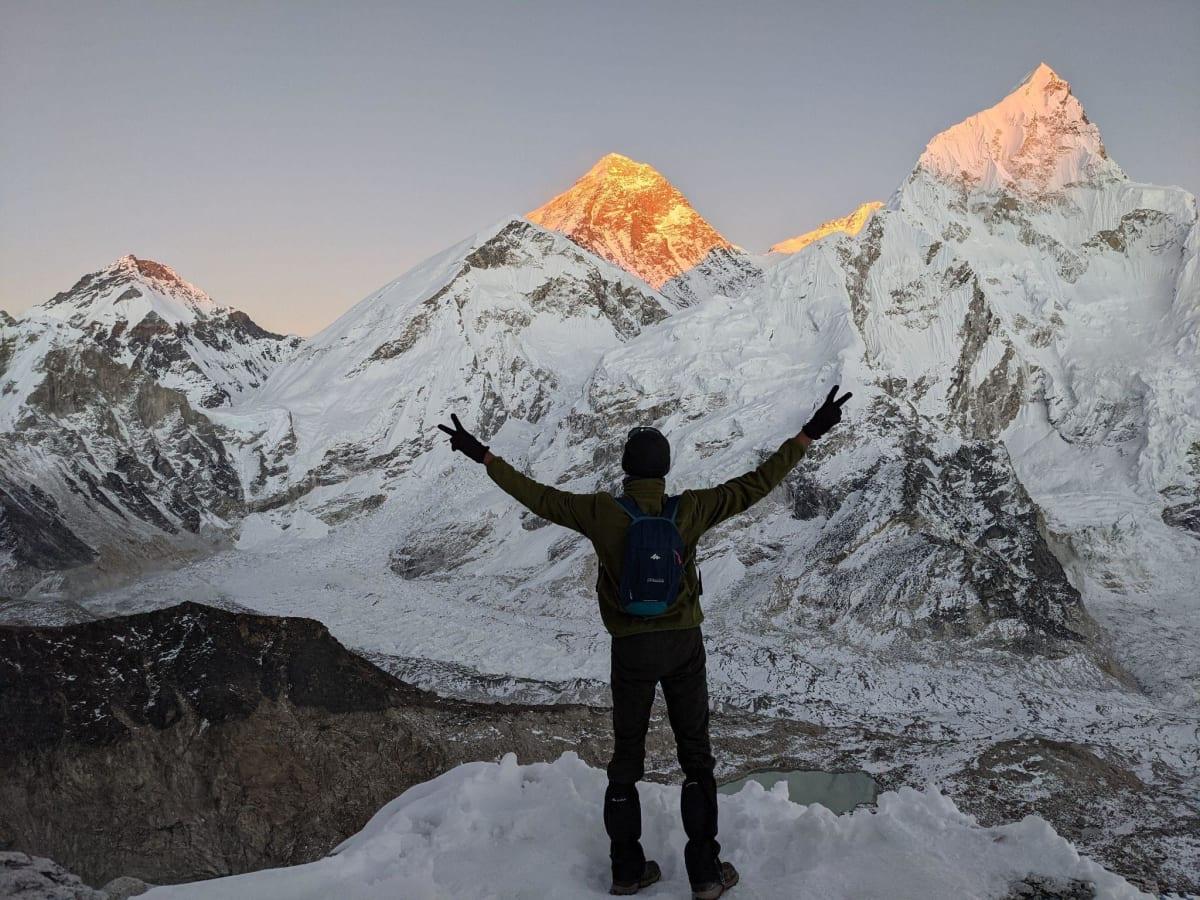
The Everest Base Camp trek is one of the most recognised trekking routes in the world. It takes you into Nepal’s Khumbu region, through Sherpa settlements, suspension bridges, monasteries and dramatic glacial landscapes.
The journey usually begins with a flight to Lukla. From there, the trail follows the Dudh Koshi Valley towards Namche Bazaar, an important trading and acclimatisation town. Trekkers continue through Tengboche, Dingboche and Lobuche before reaching Everest Base Camp at 5,364 metres.
Many itineraries also include an early morning climb to Kala Patthar, around 5,545 metres. It is one of the best-known viewpoints for seeing Mount Everest and the surrounding peaks.
Why choose this trek? It combines high mountain scenery, Sherpa culture and the experience of walking to the base of the world’s highest mountain.
Best time: March to May and September to November.
Difficulty: Challenging. The main challenge is altitude, combined with several consecutive days of walking.
Who should consider it? Trekkers with good endurance who can commit to a longer itinerary and prepare properly for high altitude.
Read a detailed Everest Base Camp trek itinerary and preparation guide when comparing route plans and support arrangements.
2. Annapurna Base Camp Trek – A mountain sanctuary
The Annapurna Base Camp trek, often called ABC, is a rewarding route through the Annapurna region. It is known for its changing landscapes, traditional villages and the dramatic mountain setting at the base camp.
The trail commonly starts from the Pokhara area and passes through places such as Ghandruk, Chhomrong, Bamboo and Deurali. As the route climbs, green hills and forests gradually give way to a more rugged mountain environment.
Annapurna Base Camp sits at approximately 4,130 metres. The surrounding peaks create a natural mountain amphitheatre, making the final approach a memorable part of the journey.
Why choose this trek? It offers a close-up Himalayan experience without requiring the same length of time as some of Nepal’s longer circuits.
Best time: March to May and September to November.
Difficulty: Moderate to challenging, depending on the itinerary and daily walking hours.
Who should consider it? First-time Himalayan trekkers with reasonable fitness, as well as experienced walkers looking for a shorter high-mountain journey.
There are different ways to organise the route. A shorter itinerary may begin and end in Pokhara, while a longer plan can include additional village stays or sightseeing. Compare the walking schedule carefully rather than choosing only by the advertised number of days.
For route planning, see this Annapurna Base Camp trek guide.
3. Mardi Himal Trek – Big mountain views in fewer days
Mardi Himal is a popular choice for travellers who want a shorter Himalayan trek. Located in the Annapurna region, the trail climbs through forests, small settlements and open ridgelines towards high viewpoints below Mardi Himal and Machhapuchhre, also known as Fishtail Mountain.
The route is particularly attractive because the scenery changes quickly. Lower sections pass through rhododendron and oak forests, while higher sections open up to wide mountain views.
A typical trek takes around five to seven walking days, depending on the route and starting point. The upper viewpoint reaches approximately 4,500 metres, so the short duration should not be mistaken for an easy walk.
Why choose this trek? It offers impressive mountain scenery within a relatively short holiday.
Best time: March to May and September to November.
Difficulty: Moderate, with steep sections and significant altitude gain.
Who should consider it? Fit beginners and trekkers with limited time who are comfortable with uphill walking.
See a Mardi Himal trek route and itinerary before deciding how many days to allow.
4. Ghorepani Poon Hill Trek – A rewarding first Himalayan trek
Poon Hill is one of Nepal’s best-known short trekking routes. It is a good introduction to mountain walking because it combines village trails, forest paths and impressive sunrise views without requiring a very long expedition.
The route usually passes through Ghorepani and nearby Gurung and Magar villages. The early morning climb to Poon Hill, at around 3,210 metres, is the main highlight. On a clear day, the viewpoint offers broad views of the Annapurna and Dhaulagiri ranges.
Why choose this trek? It is short, accessible from Pokhara and offers a memorable mountain experience.
Best time: March to May and September to November.
Difficulty: Easy to moderate, although there are many stone steps and uphill sections.
Who should consider it? Beginners, families with suitable fitness and travellers with only a few days available.
Do not underestimate the stairs. A little preparation with regular walking and stair climbing can make the route much more enjoyable.
5. Annapurna Circuit Trek – A changing landscape across the Himalayas
The Annapurna Circuit is a longer route that takes trekkers through several different landscapes. Depending on the itinerary, the journey may include subtropical valleys, pine forests, traditional settlements, dry mountain terrain and high-altitude passes.
The major challenge is crossing Thorong La Pass, at approximately 5,416 metres. The route also offers cultural variety, with communities and landscapes changing as you travel through the Annapurna region.
Why choose this trek? It is one of Nepal’s most varied long-distance trekking experiences.
Best time: March to May and October to November, subject to local conditions.
Difficulty: Challenging, mainly because of the altitude, duration and high pass.
Who should consider it? Experienced trekkers or well-prepared walkers who can set aside two weeks or more.
Road access has changed parts of the traditional circuit. Before booking, check which sections will be walked and which may involve road transport.
6. Langtang Valley Trek – Mountain scenery close to Kathmandu
Langtang Valley is a strong option for travellers who want a Himalayan trekking experience without taking a domestic flight to Lukla.
The journey usually starts with a road transfer from Kathmandu to Syabrubesi. The trail then follows the Langtang River through forests and settlements before opening into a broad mountain valley.
Kyanjin Gompa is one of the main stops. Trekkers with enough time and suitable acclimatisation may climb nearby viewpoints such as Kyanjin Ri.
Why choose this trek? It offers mountain scenery, local culture and a relatively direct road approach from Kathmandu.
Best time: March to May and September to November.
Difficulty: Moderate to challenging, depending on the itinerary and viewpoint hikes.
Who should consider it? Trekkers who want a quieter alternative to Everest and Annapurna and are comfortable with several days of walking.
7. Gokyo Lakes Trek – Turquoise lakes and high mountain viewpoints
The Gokyo Lakes trek takes place in the Everest region but follows a different route from the standard Everest Base Camp trail.
Its main attractions are a series of high-altitude lakes, traditional Sherpa settlements and views of major Himalayan peaks. Gokyo Ri is a popular viewpoint, offering a wide panorama of the surrounding mountains and Ngozumpa Glacier.
Some itineraries combine Gokyo with Everest Base Camp by crossing Cho La Pass. This creates a longer and more demanding journey.
Why choose this trek? It is ideal for trekkers who want the scenery of the Everest region with the added attraction of high-altitude lakes.
Best time: March to May and September to November.
Difficulty: Challenging.
Who should consider it? Experienced trekkers or fit walkers who have prepared for high altitude and longer days.
8. Manaslu Circuit Trek – A quieter alternative to the busiest routes
The Manaslu Circuit circles Mount Manaslu, the world’s eighth-highest mountain. It is known for remote settlements, mountain scenery and a strong sense of travelling through a less-developed trekking region.
The route follows river valleys and traditional villages before reaching higher settlements and the challenging Larkya La Pass, at approximately 5,106 metres.
The trek requires careful planning. It passes through a restricted area, and permits and guide arrangements must be organised according to current regulations.
Why choose this trek? It offers a longer, more remote experience with varied landscapes and fewer crowds than some of Nepal’s most famous routes.
Best time: March to May and September to November.
Difficulty: Challenging.
Who should consider it? Experienced trekkers who are comfortable with remote conditions and longer walking days.
9. Khopra Ridge Trek – A quieter Annapurna experience
Khopra Ridge is a good option for travellers who want wide Himalayan views while exploring a less-crowded part of the Annapurna region.
The route passes through traditional villages, forests and open mountain terrain. Khopra Ridge itself sits at approximately 3,660 metres and offers views towards Dhaulagiri, Annapurna South and other surrounding peaks.
Some itineraries include an optional day trip to Khayer Lake, at a much higher altitude of around 4,660 metres. This is a demanding addition and should not be treated as a casual walk.
Why choose this trek? It combines mountain viewpoints, village stays and a quieter trail experience.
Best time: March to May and September to November.
Difficulty: Moderate for the main route; more demanding if adding Khayer Lake.
Who should consider it? Fit beginners and experienced walkers who want an alternative to the busier Annapurna routes.
Explore the Khopra Ridge trekking route to understand how the main trek and optional lake excursion differ.
10. Upper Mustang Trek – A different side of Nepal
Upper Mustang looks very different from the green valleys and forest trails often associated with Nepal. It is a high-altitude, rain-shadow region with dry landscapes, eroded cliffs, caves and settlements influenced by Tibetan culture.
The walled town of Lo Manthang is one of the region’s best-known destinations. The trek offers a combination of landscape, history, architecture and local culture.
Upper Mustang is a restricted area, so travellers must arrange the required permits and follow the applicable group and guide rules.
Why choose this trek? It offers a cultural and landscape experience unlike the classic Everest and Annapurna routes.
Best time: Spring, autumn and, in suitable conditions, the monsoon months because the region lies in a rain shadow. Weather and access still need to be checked.
Difficulty: Moderate to challenging, depending on the itinerary and altitude.
Who should consider it? Travellers interested in remote landscapes, culture and a less conventional Himalayan journey.
11. Kanchenjunga Base Camp Trek – A remote eastern Himalayan adventure
The Kanchenjunga region lies in eastern Nepal and is known for its remote valleys, high mountain scenery and long approach routes.
Some itineraries visit the north or south base camp, while extended journeys combine both sides. The trek involves substantial travel, longer walking days and limited facilities compared with more established routes.
It is not usually the best choice for a first Himalayan trek. Planning, local support and a realistic schedule are especially important.
Why choose this trek? It is a rewarding option for experienced trekkers looking for a remote and less-visited region.
Best time: Spring and autumn, with local weather and trail conditions checked before travel.
Difficulty: Very challenging.
Who should consider it? Experienced trekkers who can commit several weeks and are comfortable with remote mountain conditions.
12. Upper Dolpo Trek – For experienced adventure travellers
Upper Dolpo is one of Nepal’s most remote trekking regions. Its landscapes include high passes, dry valleys, traditional villages and a strong Tibetan cultural influence.
The region is far less accessible than the popular trekking areas. Travel arrangements can be complex, and some routes involve camping or basic accommodation.
Special permits and a licensed trekking agency are required for restricted areas. Costs can also be considerably higher because of logistics, transport and support requirements.
Why choose this trek? It offers a remote Himalayan experience for travellers who want to go beyond Nepal’s established trekking routes.
Best time: Generally late spring to early autumn, depending on the specific route and conditions.
Difficulty: Very challenging.
Who should consider it? Experienced trekkers with enough time, a flexible budget and an appetite for remote travel.
Which Nepal trek is best for beginners?
There is no single best trek for every beginner. The right choice depends on fitness, available time and how comfortable you are with steep climbs and basic mountain accommodation.
Here is a useful starting point:
- Poon Hill: A good first introduction to Himalayan trekking, with a shorter itinerary and a lower maximum altitude.
- Mardi Himal: A shorter route with impressive mountain views, but a steep climb and a high viewpoint.
- Annapurna Base Camp: A rewarding first high-altitude trek for people with good preparation and enough time for a sensible itinerary.
- Langtang Valley: A good option for trekkers who want a longer valley walk without a flight to Lukla.
Beginners should not choose a route only because it is advertised as easy. A trek that reaches 4,000 metres or more needs proper preparation, pacing and acclimatisation.
Best time to go trekking in Nepal
Nepal has several trekking seasons, but spring and autumn are the most popular for many major routes.
Spring: March to May
Spring brings warmer days, blooming rhododendrons and good trekking conditions on many routes. It is a popular time for Annapurna, Everest and Langtang.
Autumn: September to November
Autumn is known for clearer skies after the monsoon. October and November are especially popular, so accommodation and flights on busy routes should be planned early.
Winter: December to February
Lower-altitude routes such as Poon Hill may be possible in winter, depending on snowfall and weather. Higher routes can become very cold, and passes may be blocked by snow.
Monsoon: June to August
Rain, clouds, slippery trails and landslides can affect many parts of Nepal. Some rain-shadow areas, including Upper Mustang, may be more suitable than the wetter southern slopes, but conditions still need checking.
How much does trekking in Nepal cost?
The cost of a Nepal trek depends on the route, duration, group size, season and level of support.
A short trek near Pokhara will usually cost less than a remote expedition or a high-altitude route requiring domestic flights. The overall budget may include:
- International travel to Nepal
- Nepal visa, where applicable
- Domestic flights or road transfers
- Trekking permits and applicable local fees
- Guide and porter services
- Accommodation and meals
- Travel insurance
- Personal trekking equipment
- Tips and personal expenses
- Extra nights or transport if weather causes delays
For international visitors, the cost may be quoted in US dollars or another currency. Travellers from India should compare the total cost in Indian rupees and check whether the quote includes travel from their home city, Nepal-side transfers, meals, permits and accommodation.
A low headline price does not always mean a better deal. Ask for a clear list of inclusions and exclusions before paying.
Trekking in Nepal from India: What should you plan?
Nepal is a popular international trekking destination for Indian travellers. The country can be reached by air or by road through recognised border crossings, depending on the travel plan.
For flights, Kathmandu is the main international gateway. Pokhara is an important starting point for many Annapurna-region treks. Travellers should compare flight schedules, baggage rules and domestic connections before booking.
For a road journey, travellers need to plan the border crossing, onward transport, travel time and local currency. Keep valid travel documents with you and check the current entry requirements for your nationality.
A few practical tips:
- Allow time for travel between Kathmandu and the trekking region.
- Keep a buffer day if your itinerary depends on a mountain flight.
- Carry enough Nepalese currency for personal expenses in the mountains.
- Confirm what your trekking package includes.
- Buy insurance that covers the altitude and emergency evacuation relevant to your route.
Permits, guides and safety: What should trekkers know?
Trekking rules in Nepal are not identical for every route. Some areas require conservation or national park entry permits. Restricted areas have additional permit conditions. Nepal Tourism Board guidance also lists trekking regions where a licensed guide and agency-issued TIMS card are required.
Before departure, confirm the current requirements for your exact route with the Nepal Tourism Board or a government-registered trekking agency. Do not rely on old permit prices or advice from a blog that may no longer be current.
Altitude is another important part of planning. Headaches, nausea, dizziness and unusual tiredness can be warning signs of altitude illness. A safe itinerary should include time to acclimatise. If symptoms worsen, do not continue climbing. Tell your guide and follow medical advice; descent may be necessary.
A few basic safety habits make a difference:
- Walk at a steady pace and avoid rushing uphill.
- Follow the acclimatisation schedule.
- Drink regularly and eat enough.
- Keep warm and use suitable layers.
- Carry personal medication and a basic first-aid kit.
- Use a qualified guide where required and where local support is important.
- Check that your insurance covers trekking at the maximum altitude of your route and emergency evacuation.
No itinerary or guide can remove every mountain risk. Weather, altitude and trail conditions can change quickly.
What should you pack for a Nepal trek?
Your packing list will depend on the season, route and altitude. For most teahouse treks, useful essentials include:
- Broken-in trekking boots
- Comfortable trekking trousers and quick-dry layers
- Warm fleece and insulated jacket
- Waterproof jacket and trousers
- Warm hat, gloves and sun protection
- Sunglasses and sunscreen
- Reusable water bottles and a purification method
- Headlamp
- Personal medicines and basic first aid
- Trekking poles, if useful for your knees and balance
- A small daypack
- Passport, permits and insurance details
For colder and higher routes, a suitable sleeping bag and additional insulation may be needed. Confirm what can be rented, borrowed or provided by your trekking operator before travelling.
Frequently asked questions about trekking in Nepal
1. Which is the best trek in Nepal?
Everest Base Camp is a classic choice for high-altitude mountain scenery and Sherpa culture. Annapurna Base Camp is popular for its mountain sanctuary setting, while Mardi Himal and Poon Hill are good options for shorter holidays. The best route depends on your fitness, time and experience.
2. Which Nepal trek is best for beginners?
Poon Hill is a common first choice because it is shorter and reaches a lower altitude than many major routes. Mardi Himal and Annapurna Base Camp can also suit fit beginners with preparation and a sensible itinerary.
3. How many days are enough for trekking in Nepal?
A short trek such as Poon Hill may take around four to five walking days. Mardi Himal often takes five to seven days, while Everest Base Camp usually needs around 12 to 14 days on the route. Add travel and buffer days.
4. What is the best month for trekking in Nepal?
March, April and May are popular spring months. September, October and November are popular autumn months. The best month depends on the region and route.
5. Is Nepal good for trekking in December?
Yes, some lower-altitude routes can be suitable in December when conditions allow. Higher routes are much colder and may have snow or blocked passes. Check the local forecast and trail conditions before departure.
6. Is a guide required for trekking in Nepal?
Guide and TIMS requirements depend on the route and current regulations. Nepal Tourism Board lists specific regions where a licensed guide and agency-issued TIMS card are required. Restricted areas also have their own rules. Confirm the latest requirements before travelling.
7. Is trekking in Nepal expensive?
It can be planned at different budget levels. Shorter routes with road access generally have simpler logistics, while remote treks, domestic flights, restricted-area permits and longer itineraries can increase the cost. Compare full inclusions rather than the advertised package price alone.
8. Can Indian citizens trek in Nepal?
Yes. Indian citizens can travel to Nepal, subject to the applicable entry and identification requirements. Check current official guidance before departure and carry the required documents.
9. Do I need travel insurance for trekking in Nepal?
Travel insurance is strongly recommended. Check that the policy covers trekking at the maximum altitude of your route and emergency evacuation, including helicopter evacuation where relevant. Standard travel insurance may exclude high-altitude trekking.
10. Can beginners do Everest Base Camp?
Some beginners complete Everest Base Camp, but it is not a beginner-level walk. It involves many days of walking at high altitude. Build fitness in advance, choose an itinerary with proper acclimatisation and take advice from qualified trekking professionals.
Final thoughts: Choose the trek that fits your journey
Nepal has a trekking route for almost every kind of mountain traveller. Poon Hill and Mardi Himal offer shorter adventures. Annapurna Base Camp and Langtang provide a longer introduction to Himalayan landscapes. Everest Base Camp is a major high-altitude goal, while Manaslu, Kanchenjunga and Dolpo suit those looking for more remote journeys.
Before choosing, think about how many days you have, how much altitude you are comfortable with and what kind of experience you want. A well-planned trek is not about reaching the highest point as quickly as possible. It is about enjoying the journey, respecting the mountains and returning safely with memories worth sharing.