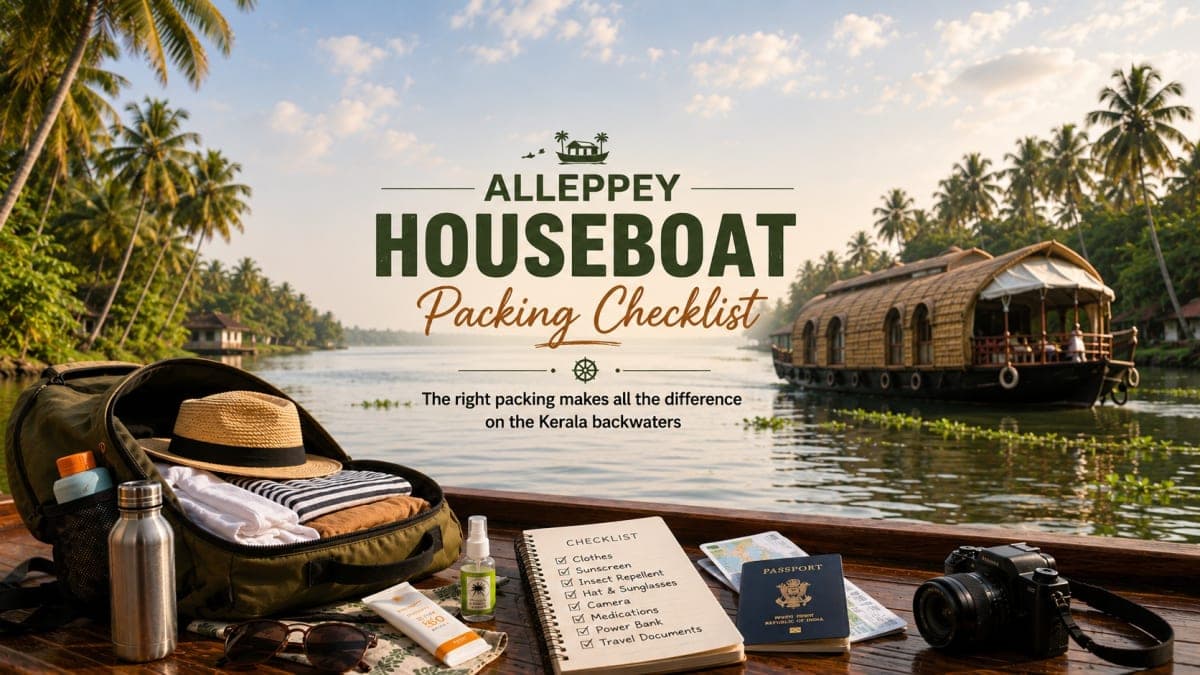
You've sorted the big thing — your houseboat is booked. Now comes the question almost every first-time visitor to Kerala asks in the days before travel: what exactly do I pack?
A Kerala houseboat trip sounds simple. You float. You eat. You watch the backwaters drift past. But the environment you're floating through — the vast, mirror-still expanse of Vembanad Lake, the narrow canal tributaries of Alappuzha, the humid delta air — demands a specific kind of preparation that most generic packing lists completely miss.
This guide is built from the ground up for people travelling to Alleppey (officially Alappuzha) for an overnight or multi-day backwater cruise. Whether you're visiting in the blazing heat of April, the dramatic downpours of the Kerala monsoon, or the golden comfort of December, this is the checklist that will make your houseboat stay genuinely comfortable — not just survivable.
1. Understanding the Climate Before You Pack
Kerala sits just above the equator. That alone tells you most of what you need to know: it is warm, it is humid, and the air holds moisture even on the clearest of days. The specific texture of that warmth, though, changes considerably by month.
October to February is the sweet spot. Temperatures hover between 24°C and 32°C. Evenings on the water carry a genuine breeze. This is when the backwaters feel most forgiving, and most travellers find light cottons perfectly comfortable through the day.
March to May is peak summer. By midday, the deck of a houseboat in open water can feel ferociously hot. Breathable fabrics and sun protection become non-negotiable. Shade is your friend — thankfully, most quality houseboats have covered sit-out areas at the front.
June to September is the monsoon. This is Kerala at its most dramatic and, for those who've experienced it, its most beautiful. The rain can arrive with almost no warning, falling in thick curtains across the paddy fields. The air smells of earth and green things. You will get wet. Planning for that wetness transforms the experience from stressful to spectacular.
Read through the section most relevant to your travel window — but do read all of them, because Kerala weather respects no forecast entirely.
2. Clothing: What Actually Works on a Houseboat
The two enemies of comfort on a Kerala backwater trip are heat and humidity. Synthetic fabrics trap both. Cotton and linen release them.
Pack clothes that are loose-fitting and light-coloured. Dark fabrics absorb radiant heat off the water surface — something most travellers don't anticipate until they're already uncomfortable. Light colours reflect it.
For women
- Loose cotton kurtas or linen shirts — versatile, culturally respectful, and comfortable
- Lightweight palazzo trousers or cotton salwar — far more practical than jeans in this humidity
- A light dupatta or scarf — useful in temples, useful against sun, useful when the evening gets breezy
- One thin layer for evenings (October–February only) — a light cardigan is enough
- A modest swimsuit if you plan to use a pool-deck houseboat — cover up when moving between areas
For men
- Linen or cotton shirts — short or long sleeve both work
- Lightweight chinos or cotton trousers — more versatile than shorts for temple visits en route
- Shorts are perfectly fine on board, but carry one pair of full trousers for off-boat excursions
- A thin layer for cooler season evenings
How many outfits? For a one-night trip, two sets is enough — one for travel day, one fresh set for the morning after. For two nights, three sets. Houseboats do not have laundry facilities, so pack accordingly.
3. Footwear for the Backwaters
This is the single most underrated item on any Kerala houseboat packing list, and almost everyone gets it wrong on their first trip.
Houseboat decks — especially at the bow — get wet. Polished wooden or fibreglass surfaces become genuinely slippery when wet. Flip-flops with no grip are an invitation to a fall. Closed trainers trap sweat and feel oppressive within an hour in the humidity.
The right answer is a pair of rubber-soled, open sandals with a back strap. Brands like Teva, Birkenstock (the EVA range), or simple Indian rubber chappals all work well. They grip wet surfaces, dry fast, and don't overheat your feet.
Pack one pair of easy slip-on sandals for on-board use, and one slightly smarter pair if you plan to dine at a restaurant or visit a town during your cruise. Leave your best leather shoes at the hotel.
4. Sun, Skin and Mosquito Protection
The backwaters reflect sunlight off the water surface and amplify UV exposure significantly. People who would never burn at a beach find themselves sunburned after two hours on an open houseboat deck. Take this seriously.
- Sunscreen: SPF 50+ mineral sunscreen. Apply before you reach the deck in the morning. Reapply every two hours. Bring more than you think you need — it's hard to find good sunscreen locally.
- Sunglasses: Polarised lenses are particularly useful over water — they cut the glare off the lake surface dramatically.
- A wide-brim hat or cap: Non-negotiable in summer. Useful even in winter on the open deck at midday.
- Mosquito repellent: Yes, absolutely bring it. The backwater region at dusk — particularly around the canal edges and paddy field stretches — has active mosquito populations. Most houseboats provide mosquito nets over the beds, but exposed skin on the evening sit-out deck needs protection. Repellents containing DEET or Picaridin work reliably. Ayurvedic citronella-based sprays are available locally but are less effective in high-mosquito zones.
- After-bite cream or antihistamine: For the bites that get through despite precautions.
- Lip balm with SPF: Lips dry out fast on the water. Easily forgotten, deeply appreciated.
5. Electronics and Charging on a Houseboat
Here is something many travel blogs don't tell you clearly: houseboat power supply is limited and sometimes inconsistent.
Most houseboats run on a combination of generator power and, increasingly, solar panels. The generator typically runs during specific hours — often evenings and early mornings — and may not be available continuously through the night. Premium and luxury houseboats often have better power infrastructure, but it's still not the same as a hotel room.
What this means practically:
- Bring a power bank — a high-capacity one (20,000 mAh or above) if you have multiple devices. Charge it fully before boarding.
- Universal travel adapter: India uses Type C and Type D plugs. Most houseboat sockets are Type D (three round pins). If you're travelling from Europe, the US, or the UK, bring an adapter.
- Limit device count: Don't expect to charge a laptop, phone, camera, drone, and portable speaker simultaneously on a standard houseboat connection.
- Download offline entertainment: Spotify playlists, Netflix downloads, Kindle books, offline maps of Alleppey. Mobile data signal can be patchy in the middle of Vembanad Lake.
- Dry bag or waterproof pouch for devices: If you're travelling during the monsoon, or simply sitting at the open bow section, rain and spray are real risks to electronics.
6. Camera and Drone Guidance
The Kerala backwaters are among the most photographed landscapes in South Asia — and for good reason. The light at golden hour over Vembanad Lake is the sort of thing photographers travel across continents for.
Camera packing tips
- Bring extra SD cards and charged batteries. You will shoot more than you expect.
- A microfibre cloth is essential for wiping lens condensation — moving from cool interior cabins to warm, humid outdoor decks creates instant fogging.
- A lightweight tripod for long-exposure water shots at dawn is worth the bag space if photography is a priority.
- Use a waterproof camera bag or, at minimum, a dry bag large enough for your camera body and one lens.
Drone guidance
Drone flying over the Kerala backwaters is subject to DGCA (Directorate General of Civil Aviation) regulations. You need a valid UAS remote pilot certificate, and flying over populated areas, waterways with boat traffic, or near airports is restricted — Cochin International Airport is nearby. Check the current DGCA Digital Sky Portal rules before you travel. Uninformed drone use has led to confiscation and fines. If in doubt, leave the drone behind and enjoy the view with your eyes.
7. Medications and Motion Sickness
The backwaters are calm. This is not the open ocean. But houseboats do have a gentle, persistent rocking motion — particularly in the wider stretches of Vembanad Lake — and some travellers, especially children, find this triggers nausea.
- Motion sickness tablets: Cinnarizine (Stugeron) works well and causes less drowsiness than older antihistamine-based options. Take it 30–60 minutes before boarding if you're prone to motion sensitivity.
- Oral rehydration salts: Humidity and heat cause faster dehydration than most travellers expect. Electrolyte packets are lightweight and invaluable.
- A basic antibiotic and antidiarrheal: Consult your GP before travel, but having a prescribed course for a food-related stomach illness is standard practice for travellers to India.
- Antihistamines: For insect bites, dust reactions, or airborne allergens.
- Any prescription medication in original packaging — customs at Indian airports may ask to verify prescriptions for controlled medications.
- Antiseptic wipes and insect bite treatment.
8. Waterproof Essentials
Whether you're visiting during monsoon or not, the backwaters introduce water into your life in ways a landlocked holiday does not. Rain, spray, humidity, and the occasional boat-boarding puddle all conspire against dry bags.
- Dry bag (10–20L): The single most useful waterproofing tool. Roll-top dry bags are inexpensive and genuinely waterproof.
- Ziplock bags: Simple, lightweight, and useful for passports, cash, paper documents, and small electronics.
- Waterproof phone pouch: Particularly useful if you plan to hang out at the boat's edge or during monsoon travel.
- Quick-dry travel towel: Standard cotton towels take forever to dry in high humidity. Microfibre travel towels dry in hours.
- Poncho or lightweight rain jacket: For monsoon season, a packable rain poncho is more practical than an umbrella on a moving boat deck.
9. Monsoon vs Summer Packing Comparison
| Item | Summer (Mar–May) | Pleasant Season (Oct–Feb) | Monsoon (Jun–Sep) |
|---|---|---|---|
| Clothing weight | Ultra-light cotton | Light cotton / linen | Light + quick-dry fabrics |
| Rain gear | Not needed | Light layer for evenings | Essential — poncho + dry bag |
| Sunscreen | SPF 50+ critical | SPF 30–50 | SPF 30+ (cloud cover varies) |
| Hat / cap | Wide-brim essential | Recommended | Waterproof hat or hood |
| Mosquito repellent | Moderate need | Moderate need | High need — pack extra |
| Footwear | Grip sandals | Grip sandals | Waterproof sandals |
| Dry bag | Optional | Optional | Absolutely essential |
| Power bank | Yes | Yes | Yes — charge fully before boarding |
| Evening layer | Not needed | Light cardigan | Light rain layer |
10. What Your Houseboat Already Provides
A common mistake — particularly among travellers used to self-catering accommodation — is packing things the houseboat already supplies. This leads to over-stuffed bags and unnecessary weight.
Most standard and premium houseboats in the Alleppey backwaters provide:
- Bed linen and pillows
- Basic towels (though quality varies — bring your own microfibre towel for peace of mind)
- Meals as part of the package — breakfast, lunch, and dinner are typically included
- Drinking water (bottled)
- Life jackets (required safety equipment)
- Basic toiletries on better-quality boats — check with your operator
What they do NOT reliably provide: high-quality sunscreen, mosquito repellent, motion sickness tablets, adapters for foreign plugs, or any personal medication. These you must bring yourself.
If you're unsure what your specific houseboat includes, contact our team directly before you pack — a quick message saves a lot of guesswork.
Not yet decided on your houseboat? Browse our Kerala houseboat packages and find the right one for your trip.
11. Packing for Luxury Travellers
If you've booked a premium or luxury houseboat, the on-board amenities will be considerably richer — air-conditioned bedrooms, en-suite bathrooms with hot water, a sun deck with loungers, sometimes even a small private pool. Your packing list can be refined accordingly.
- A quality camera or mirrorless camera body — the light on premium boats' upper decks is extraordinary
- A light formal outfit — some guests prefer to dress for dinner even on the water
- Personal premium toiletries — while luxury boats provide basics, bringing your preferred moisturiser or hair products is worth the space
- A Kindle or physical book — the backwaters invite slow afternoons that demand good reading material
- Bluetooth speaker — check with your operator, but most luxury boats permit personal audio on private decks
- A bottle of wine or preferred spirit — alcohol is not always provided on board; check your booking in advance
12. Family and Kids Packing Tips
Travelling with children on a Kerala houseboat is genuinely wonderful — children are usually transfixed by the fishermen's nets, the ducks in the canal, the kingfishers that flash past at eye level. But it does require additional preparation.
- Children's-formula sunscreen — SPF 50+, fragrance-free
- Child-safe insect repellent — DEET-free formulations for younger children
- Life jackets for children — your houseboat operator should provide these; confirm in advance
- Motion sickness medication approved for your child's age range
- Lightweight familiar snacks — meals are provided, but having familiar options for younger or fussy eaters removes stress
- A small first aid kit: plasters, antiseptic wipes, child paracetamol, antihistamine cream
- Entertainment for downtime: colouring books, a tablet with downloaded content, small card games
- One extra set of clothes per child per day — children find ways to get wet
13. What NOT to Bring
Packing well is as much about what you leave out as what you put in. These are the items that consistently cause problems or simply aren't needed.
- Heavy suitcases: Storage space on houseboats is limited. A medium duffel bag or a soft-sided carry-on is far easier to manage than a rigid trolley case.
- Excessive electronics: A laptop, tablet, camera, drone, e-reader, and three phones is too much. Choose what you actually need for a 24–48 hour trip on the water.
- Expensive jewellery: There is nowhere secure to store it on most houseboats, and the humid air and water exposure will damage certain metals and stones.
- Strong perfumes or colognes: These attract insects and can be overwhelming in enclosed boat cabins.
- Single-use plastics: Waste management on the backwaters is a serious environmental issue. Bring a reusable water bottle, say no to plastic straws, and take your rubbish with you. The health of the Vembanad Lake ecosystem depends on it.
- Valuables you'd be devastated to lose: Boats rock. Things fall overboard. Leave irreplaceable items at your hotel.
- Anything that requires ironing: There are no ironing facilities on board. Wrinkle-resistant fabrics only.
14. Complete Packing Checklist
| Category | Item | Essential? | Notes |
|---|---|---|---|
| Clothing | Loose cotton or linen tops (2–3) | Yes | Light colours preferred |
| Clothing | Lightweight trousers or palazzos (2) | Yes | Avoid denim |
| Clothing | Shorts (1 pair) | Optional | Fine on board; cover up off-boat |
| Clothing | Evening layer / light cardigan | Oct–Feb only | One thin layer is enough |
| Clothing | Swimwear | If boat has pool deck | Check your booking |
| Footwear | Grip-soled sandals with back strap | Yes | Rubber sole is essential |
| Footwear | Slip-on sandals | Yes | For relaxed deck time |
| Protection | Sunscreen SPF 50+ | Yes | Bring more than you think |
| Protection | Polarised sunglasses | Yes | Cuts water glare |
| Protection | Wide-brim hat or cap | Yes | Essential March–September |
| Protection | Mosquito repellent (DEET or Picaridin) | Yes | Especially important at dusk |
| Protection | After-bite / antihistamine cream | Recommended | For bites that get through |
| Protection | Lip balm with SPF | Recommended | Often forgotten, always needed |
| Electronics | Power bank 20,000 mAh+ | Yes | Fully charged before boarding |
| Electronics | Type D plug adapter | Foreign travellers | Three round pins — Indian standard |
| Electronics | Phone and/or camera | Yes | Spare batteries if using DSLR |
| Electronics | Waterproof phone pouch | Yes | Essential during monsoon season |
| Waterproofing | Dry bag 10–20L (roll-top) | Yes | Protects all bag contents |
| Waterproofing | Ziplock bags (assorted sizes) | Yes | Documents, cash, small items |
| Waterproofing | Microfibre travel towel | Recommended | Dries fast in high humidity |
| Waterproofing | Packable rain poncho | Monsoon essential | More practical than an umbrella |
| Health | Motion sickness tablets | If prone | Take 30–60 min before boarding |
| Health | Oral rehydration salts | Recommended | Dehydration is fast in heat |
| Health | Basic antibiotics (prescribed by GP) | Recommended | Consult your doctor before travel |
| Health | Antihistamine tablets | Recommended | Insect bites, dust, allergens |
| Health | Antiseptic wipes and plasters | Yes | Small first aid pouch |
| Documents | Passport and visa (waterproofed) | Yes | Keep in ziplock bag at all times |
| Documents | Travel insurance details | Yes | Print a copy and screenshot |
| Documents | Booking confirmation | Yes | Download offline version too |
| Misc | Reusable water bottle | Yes | Reduces plastic waste on the water |
| Misc | Small backpack or day bag | Yes | For off-boat excursions |
| Misc | Cash in Indian Rupees | Yes | ATMs not available while on water |
Everything packed? View our Kerala houseboat packages and book your backwater experience — we'll handle the rest.
15. Cultural Tips for Foreign Travellers
The backwater communities along the Alappuzha canal network are largely Hindu and Christian fishing and farming villages. Your houseboat passes through their daily lives, not past a theme park backdrop. A few considerations make the experience more respectful and more rewarding.
- Dress modestly when visiting temples or churches en route. Shoulders and knees should be covered. Pack a scarf or light layer you can throw on quickly.
- Ask before photographing people. The women washing clothes at the canal ghats, the fishermen casting nets at dawn — they are not exhibits. A smile and a gesture asking permission go a long way.
- Remove footwear before entering any religious site and before entering most home kitchens if you're invited to see the boat crew prepare meals.
- Alcohol on board: Check with your operator in advance. Some boats permit it, others do not. Drinking discreetly on the private deck is usually fine on boats where it's permitted; public display is not appropriate.
- Tipping your houseboat crew is warmly welcomed and makes a genuine difference. Budget roughly ₹500–₹1,000 per day for the crew collectively.
If you're still planning the wider trip around your houseboat stay, our Kerala travel blog has guides on everything from the best time to visit the backwaters to what to expect during the monsoon season.
16. Frequently Asked Questions
What clothes should I wear on a Kerala houseboat?
Loose, light-coloured cotton or linen clothing works best. The backwater environment is warm and humid — breathable natural fabrics are far more comfortable than synthetics. Men can wear shorts on board; women will find loose kurtas or linen trousers both comfortable and culturally appropriate. For off-boat visits to temples or towns, carry one set of slightly more modest, full-coverage clothing.
Do Kerala houseboats provide towels and toiletries?
Most standard and premium houseboats provide basic towels and sometimes simple toiletries like soap and shampoo. However, quality and availability vary significantly between operators. It is always safer to bring your own microfibre travel towel and personal toiletries rather than relying on what's supplied. If you're unsure, ask your operator directly before boarding.
Should I carry mosquito repellent on a houseboat?
Yes — absolutely. The backwaters around Alappuzha are a wetland ecosystem, and mosquitoes are most active at dusk and dawn, particularly near the canal banks and paddy field stretches. Your houseboat will have mosquito nets over the beds, but exposed skin on the evening deck is vulnerable. A repellent containing DEET or Picaridin is the most reliable option. Bring enough for the full duration of your stay.
Is there a charging facility inside Kerala houseboats?
Yes, but with limitations. Houseboats typically run on generator power during specific hours and increasingly on solar. This means continuous charging of multiple devices throughout the day is not always possible. Bring a high-capacity power bank — 20,000 mAh or above — fully charged before boarding. Foreign travellers will also need a Type D plug adapter.
What should foreign travellers specifically pack for Alleppey?
Beyond the standard packing list, foreign travellers should specifically carry: a Type D plug adapter (Indian sockets take three round pins), prescription medications in original labelled packaging, travel insurance documentation, a photocopy of their passport kept separately from the original, and Indian Rupees in cash — ATMs are not accessible while you are on the water.
Can I wear shorts on a Kerala houseboat?
Yes, shorts are perfectly acceptable on board the houseboat itself. The boat is your private accommodation and comfort is the priority. However, if your itinerary includes stopping at temples, mosques, or local villages — which many backwater cruises do — you'll want to change into full-length trousers or a skirt before going ashore. Pack at least one pair of longer trousers alongside your shorts.
What should I avoid bringing on a houseboat?
Leave behind: heavy rigid suitcases (storage space is tight), excessive electronics you won't actually use, expensive or irreplaceable jewellery, single-use plastics, strong perfumes that attract insects, and anything that requires ironing. A medium soft-sided bag with only what you genuinely need for 24–48 hours makes the entire experience dramatically more comfortable.
Have more questions before you travel? Get in touch with our team — we're happy to help you prepare for your Alleppey houseboat experience.